KUHeS TAPS INTO GHANA’S HERBAL MEDICINE SUCCESS STORY
KUHeS TAPS INTO GHANA’S HERBAL MEDICINE SUCCESS STORY
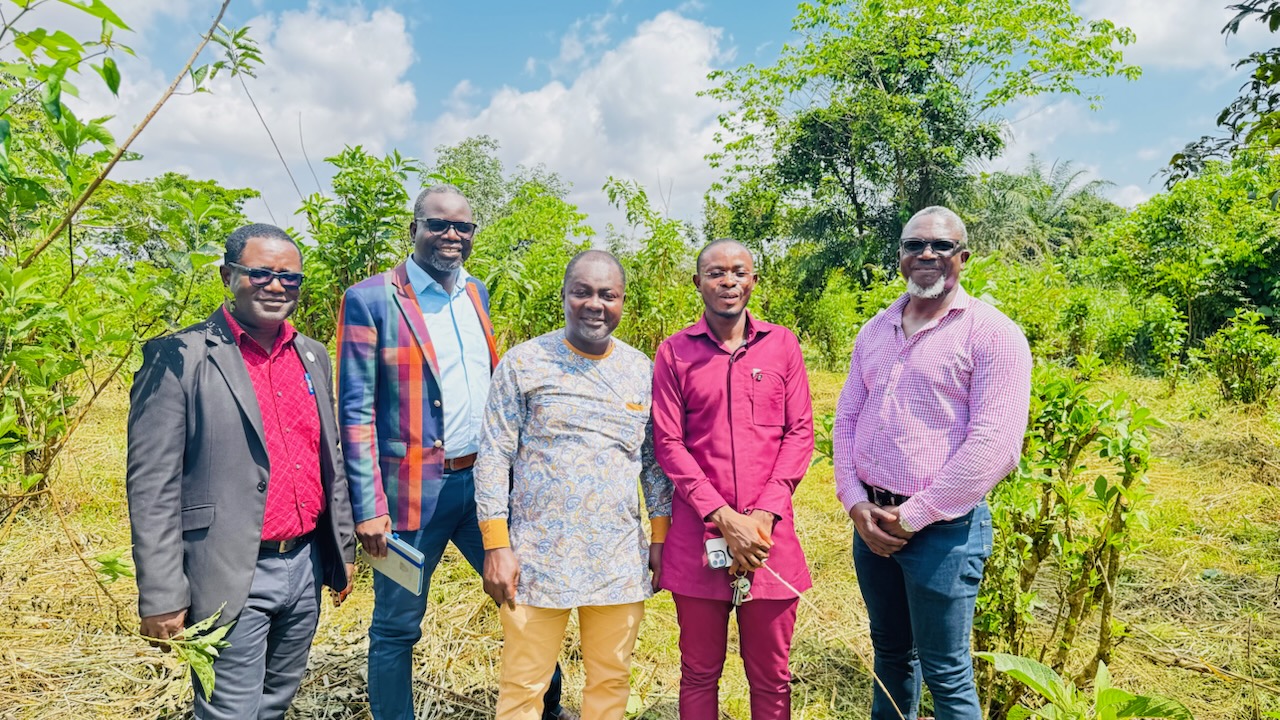
A two-member delegation from the Kamuzu University of Health Sciences (KUHeS) under the School of Life Sciences and Allied Health Professions (SLAHP) recently completed a learning and benchmarking visit to Ghana, gaining first-hand insights into the country’s well-established herbal medicine industry.
The team led by SLAHP Executive Dean, Associate Professor Arox Kamng’ona, and joined by Dr. John Mponda undertook the visit as part of KUHeS’ preparations to establish a pharmaceutical manufacturing plant for both conventional and herbal medicines, as well as to introduce a Bachelor of Science in Herbal Medicine programme.
The visit had three major objectives:
- Participation in the 3rd Oku Ampofo Memorial Conference, themed “Herbal Medicine Research: Harnessing our Heritage for Health and Wealth”, held at Fiesta Royale Hotel in Accra;
- A strategic visit to the Centre for Plant Medicine Research (CPMR) in Mampong-Akuapem for knowledge exchange and collaboration;
- A benchmarking visit to Kwame Nkrumah University of Science and Technology (KNUST) and its herbal industry partners in Kumasi.
Presentations and Engagements at the Oku Ampofo Conference
- During the conference, Dr. Mponda delivered a presentation titled “Towards Regulation of Herbal Medicinal Products in Malawi: Distribution, Claims and Scientific Evidence”. He also joined a panel discussion on the protection of intellectual property rights for Indigenous traditional knowledge and provided updates on Malawi’s regulatory landscape.
- Associate Professor Kamng’ona chaired a parallel scientific session focused on nanoparticles, essential oils and phytomedicine, highlighting KUHeS’ growing role in herbal medicine research.
Lessons from Ghana’s Centre for Plant Medicine Research The delegation toured the Centre for Plant Medicine Research, a statutory institution established by an Act of Parliament in 1975. The centre conducts comprehensive plant medicine research and operates a full herbal medicine clinic where licensed herbal medical practitioners diagnose and treat patients. The same facility manufactures approved herbal medicines that appear on Ghana’s national herbal medicines list.
The CPMR maintains rigorous standards through:
- Good Manufacturing Practices (GMP)
- Good Agricultural and Collection Practices (GACP) at its herbal farm
- Well-equipped quality control laboratories for phytochemistry, microbiology, pharmaceutics and toxicity studies
These systems offered KUHeS a practical model for Malawi’s own development of a regulated herbal medicine sector.
Benchmarking at KNUST: Training and Integrated Practice
At Kwame Nkrumah University of Science of Technology (KNUST), the team benchmarked KUHeS’ draft Bachelor of Science in Herbal Medicine curriculum against KNUST’s long-running programme. They toured the Faculty of Pharmacy, as well as the Departments of Pharmacognosy and Herbal Medicine, which train Ghana’s herbal medical doctors.
A key highlight was observing integrated healthcare at the Kumasi Regional Hospital, where both herbal and conventional medical doctors work side by side. Patients self-select whether to seek herbal or conventional care upon arrival at the outpatient department—an arrangement supported by shared diagnostic facilities such as laboratories and radiology services.
The team also visited Ebenage Herbal Production and Consult and Solak Biochemist Limited, two of several herbal medicine manufacturing companies and some private herbal clinics that work closely with KNUST.
Reflections from KUHeS
Associate Professor Kamng’ona described the visit as “a major eye-opener.”
“Ghana has advanced beyond many African countries in regulating herbal medicinal products, accrediting practitioners, and training skilled personnel. This is the direction KUHeS aims to guide Malawi into—grounded in proper research, scientific validation and sustainable use of Indigenous knowledge,” he said.
Dr. Mponda echoed this sentiment, emphasizing the importance of partnerships. “Our visit to the Hepa Plus production site demonstrated the value of strong quality-control systems across the production line. The best way to build Malawi’s herbal industry is to collaborate with institutions already doing well. We look forward to continuing our partnership with KNUST and Hepa Plus in training, quality control and raw-material cultivation,” he noted.
Sustainable Sourcing: A Model from Ebenage Herbal Production
The delegation also toured a 20-acre medicinal plant farm owned by Ebenage Herbal Production and Consult, producers of Hepa Plus. The farm uses no inorganic fertilizers or agrochemicals, ensuring raw materials are free from contamination—an essential component of high-quality herbal medicine production.
Head of KNUST’s Department of Herbal Medicine, Dr. Kofi Tuckson, who joined the visit, commended the initiative:
“The sustainability of the herbal medicine industry depends on the availability of raw materials. Illegal mining is destroying forests and water bodies, so these dedicated medicinal farms are essential.”
Ebenage’s Founder and CEO also highlighted the urgency of protecting medicinal resources and strengthening industry capacity: “Our primary goal is to sustain production of HEPA Plus, PAVI, and Plasmox. But we also welcome students and researchers—training the next generation is how we build a better Ghana and advance herbal medicine.”
A Strategic Path Forward for Malawi
The Ghana visit marks an important milestone in KUHeS’ efforts to professionalize and regulate herbal medicine in Malawi. The delegation returned with concrete lessons on:
- regulatory frameworks,
- curriculum development,
- clinical integration models,
- quality control systems, and
- sustainable raw-material cultivation.
These insights will guide ongoing local efforts to develop a robust herbal medicine industry aligned with global standards while preserving and valuing Indigenous knowledge.